What a brand means.
Authored, structured, shared.
Brand Intent is an open language to describe a brand: its voice, its behaviour, its look and the facts it stands on. People and AI agents read and write it alike.
- Five layers describe the brand
- .identity→.brand→.format→.purpose→.composition
- A story orchestrates
- .story
- Five fact files say what is true
- .time.place.person.group.work
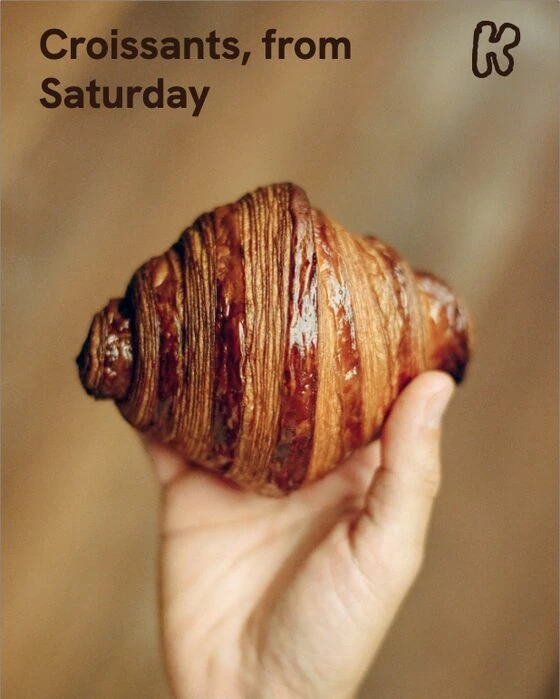
krume Sourdough, butter, eighteen hours. 90 g each.
12 minutes ago
The reasoning behind a brand is rarely written down.
Brand teams write vision, mission and values, then jump to the visual identity. The reasoning in between (why this typeface, why never that word, why this audience first) lives in someone’s head, or on page 47 of the brand book. Guidelines stay fuzzy: “be authentic”, “use a warm tone”. Two designers read the same line and make two different things, both arguably on brand.
The problem is older than AI. AI made it fast. A designer fills fuzzy guidelines with taste and context. An agent has neither, and falls back on the average. Brand Intent gives the reasoning a structure concrete enough to test against, written so that a person, a parser and an agent read the same file the same way.
Eleven file types in three groups: what a brand says once, what it posts, and what is true about it.
Each file type answers one question. No file repeats what an earlier one settled: a purpose narrows the identity, it doesn’t restate it. So the reasoning holds while the expression changes. Pick a file to read a few lines of it, from Krume, the commented example bakery that ships with the package.
The five layers describe the brand
A story orchestrates
Five fact files say what is true
Identity krume.identity
The strategic core: essence, promise, positioning, narratives.
Voice with checkable always and never rules, and instead pairs that teach the rewrite.
Values as behaviour, imagery rules, goals, and the review questions asked before anything goes out.
Nothing visual.
voice informal, Du The baker behind the counter: direct, dry, proud of the craft - lifestyle language (curated, hand-picked, moment of indulgence) - "artisan" or "artisanal": we say craft - "the finest ingredients" -> Tipo 1 and rye 1150 from the mill in Dachau - "baked with love" -> eighteen hours of fermentation - "fresh from the oven" -> on the shelf since six review - Does the text name the bread, the flour, the weight or the fermentation time? - Does it sound like the baker behind the counter? - Does the picture show a real step of the work or real customers? - Is the bread food, not decoration?
Brand krume.brand
The expression: colours and themes, the backgrounds under a page and the finish over it, fonts and typography styles, spacing, dividers, badges, icons.
And the brand’s place in the world: a location for sunrise and weather,
a camera, framing modules for photos, a photo-look.
Photos and videos are two folders, media/photos/ and media/videos/: a file’s name is its id, its folders are the sections.
Every value traces back to a sentence in the identity.
brand-colors #2C1810 # dark roast: a well-baked crust #C8A47E # crust: dividers and highlights #FAF6F0 # flour: not pure white, slightly warm theme Shop $white $primary $accent1 font primary Hanken Grotesk google typography headline 700 6 1.15
Format instagram-4-5-feed-portrait.format
The canvas: platform, size in pixels or millimetres, grid and three safe zones. Social, print and signage. Its one brand decision: which purposes belong here.
size:     1080 1350
grid:     5 4           # 5 rows × 4 columns
crop:     0 34 0 34     # px - profile grid crops top/bottom
comfort:  40            # px - safe reading margin
purposes: daily-bread, seasonal-special, baking-tip
Purpose daily-bread.purpose
What one kind of post is for. Semantic slots (primary, secondary, detail, meta, label, cta, credit),
each with a style, a colour and a length. A scope and context that narrow the identity for this kind of post.
And examples: whole pages, one topic each, the shape AI writing has to match.
A purpose without slots is a page without text: the picture or the clip, and the logo.
context primary is the bread name, 1-3 words (e.g. "Rye loaf"). secondary is the weight and price ("750 g · 5,80 €"). meta is one sentence: what makes this bread specific today. Never describe the bread as "delicious" or "special" - state a fact (flour type, fermentation time, seasonal ingredient). example Butter stollen, baked from the first Sunday of Advent advent Advent only Butter stollen 1 kg · €24 Butter from Brandenburg, matured for three weeks. On the shelf from 27 November.
Composition simple-stack.composition
Where the slots go. Grid mode places them in rows and columns. Flow mode stacks them in panels with sticky bars, spacers and dividers, or pins blocks to the top, bottom or centre. Photos and illustrations too. Nothing brand-specific, so one composition serves any brand.
sticky: bottom s
  | logo right

flow: panel bottom-left 2/3 1/1
  | spacer-auto
  | label left
  | primary left
  | divider-line
  | secondary left
  | spacer-s
  | meta left
  | spacer-auto
Story today.story
What the brand posts, page by page. Each page names a purpose and a composition. A slot is fixed, open, or a variable:
{weekday}, {sunrise}, {weather}, {closes}, {days-until}, {person}.
A variable without a value is not guessed: no forecast, or a closed day, and the post doesn’t go out.
Page lists repeat a page as often as the week needs.
A page with placeholder: true waits for a person’s photo or video before it goes out.
A prompt block is the brief that writes the open slots anew for every date, and a person sees the text before it goes out.
id: today format: 4:5 place: weserstrasse page daily-bread editorial {weekday} Light since {sunrise}, oven on since four. Open until {closes}, what’s gone is gone.
Time krume.time
The brand’s rhythm: its founding, its seasons, the windows a seasonal post fits, and its day.
A story names a window or a season with when: and only comes up in season. Occasions are works.
founded: 2019-05-04 season winter Winter 12-01 windows 04-15..06-24 11-27..12-24 daily 04:00 Oven on 06:00 Everything on the shelf
Place weserstrasse.place
A site the posts speak about: a shop, a café, an information office. Address, coordinates, a context line, capacity and weekly hours, with the days that differ by date. A day not named is closed.
address: Weserstraße 17, 12045 Berlin context: Former copy shop with one counter and three breads a day. Regulars at seven, sold out by noon on Saturdays. hours 07:00-14:00 07:00-13:00 closed closed capacity 6 8
Person baker.person
One person the posts name, quote or show. A name or a role, their reason, their photos, their own words, and the date they agreed. The file is the consent: no name in the file, no name in the post. Withdrawing a person is deleting one file.
id:     baker
role:   Baker
since:  2019
reason: Quit her agency job and turned the copy shop into a bakery.
consent: 2019-05-04  # no name: she is "the baker" in every post

quote
  What’s gone is gone. Tomorrow there’s more.
Group drax-mill.group
Several people under one name: a band, a team, a company, a family. Name, role, region, members, photos and the words it published as one. A group is public, so its file is no consent. The people in it have their own person files.
id:    drax-mill
name:  Drax mill
role:  The mill
where: Dachau

quote
  Stone-ground, nothing taken out, nothing put in.
Work wheat-blend.work
What the brand puts out or puts on: a product, a release, a class, an event. Title and kind in the brand’s own words, who it is by, the price, the facts a post may state, what critics wrote about it word for word, and its date: a release day with a countdown, or the days it comes round. A series gives one item per day or week, never twice, and a page can take its colour from the day’s item.
id:    wheat-blend
title: Wheat blend
kind:  bread
days:  sat
price: 500 g · €4.20
facts:
  Tipo 1 from the Drax mill, 72 % hydration. Sold out by ten.
Together, or on your own.
With me, in Brand Atelier
Brand Atelier is the tool I use with clients. We write the files together. Atelier then renders posts from them, writes text within the rules, and follows the brand’s own way of reviewing, scheduling and publishing.
Writing the files is the easy part. The real work is keeping them true over the years, and growing the language when a brand has something new to say. That’s work I do closely with each brand, so Atelier is in live testing with a small group for now. If you’d like your brand to be part of it, I’d be glad to hear from you.
The language, on your own
Everything else is open and MIT licensed: the spec, the parser, the examples and the VS Code extension. Write your own brand, point your agent at it, build a renderer, or just borrow the vocabulary.
I’d love to hear what you find. What you couldn’t say with it, and which rule doesn’t fit your brand. Open an issue, or just write.
Ten minutes with the example brand.
1. Install the VS Code extension
Syntax highlighting, completion, hover docs and validation for all eleven file types.
Or install from the VS Code Marketplace.
2. Run init
Copies the Krume example into your project and installs two skills into your AI agent:
/brand-intent to explore, author, generate and validate, and /brief to export a portable markdown brief.
Works with: Claude Code, Cursor, Gemini CLI, VS Code Copilot, Codex CLI
3. Explore, then write your own
/brand-intent example walks you through the Krume files: why the identity says what it says,
and what each later file may add.
/brand-intent onboard drafts your own identity, brand and first purpose in an interview.
npx brand-intent check validates a folder, each file and the references between them.
The package also exports the TypeScript parser for all eleven types. Every command is in the README.
Version 0.69, November 2026.
What the language gained in the last releases. Every release is in the changelog.
- v0.69 24 Nov 2026
- Purpose. A slot’s
scrim:(none,paragraph,line) wins over the purpose’s for that slot. Brand.scrim-ground:(figureorbackground) andscrim-opacity:(1–100%) in thephoto-lookset the colour and opacity of a paragraph or line scrim; by default the ground is the theme’s figure. Inbrand-colors, an indented#line is a comment, colon or not. - v0.68 21 Nov 2026
- Story. A page’s
background:is a plain colour (#RRGGBB,{item}) or the name of abackgroundblock that lies under its theme. A plain colour keeps the page free of its theme’s gradient or pattern. Brand. A gradient’s colours are free; its themes keep their ground. - v0.67 21 Nov 2026
- Brand. A gradient
backgroundcan be written instead of loaded:points(#RRGGBB at X% Y% size S%) or ameshof colour rows, on a square sheet ofsize:px.motion: drift Nslets any gradient flow and return after N seconds.

I’m Christophe Stoll. I run Studio Stoll in Hamburg, a practice for interaction design and visual language, and teach interaction design at HAWK Hildesheim. For more than twenty-five years I have designed digital products and the design systems behind them, and co-founded precious design studio. Brand Intent is how I bring that practice to brands, now that AI agents are part of the team. Its rules came out of real client work.